
- 2026-10-28
polyester filter cartridge performance analysis
Industrial air purification demands a balance between high filtration efficiency and operational longevity, especially when dealing with ultra-fine particulates. In environments where dust concentrations are volatile, the choice of media can determine the frequency of costly downtime and the overall quality of the discharged air.
The transition toward coated materials has shifted how engineers approach dust removal. By integrating specialized membranes with robust base fabrics, the industry has moved away from simple mechanical trapping toward surface-level filtration that resists deep-pore clogging.
Understanding the specific mechanics of a polyester filter cartridge allows plant managers to optimize their air quality systems for better energy efficiency and environmental compliance.

Material Composition and Base Structure
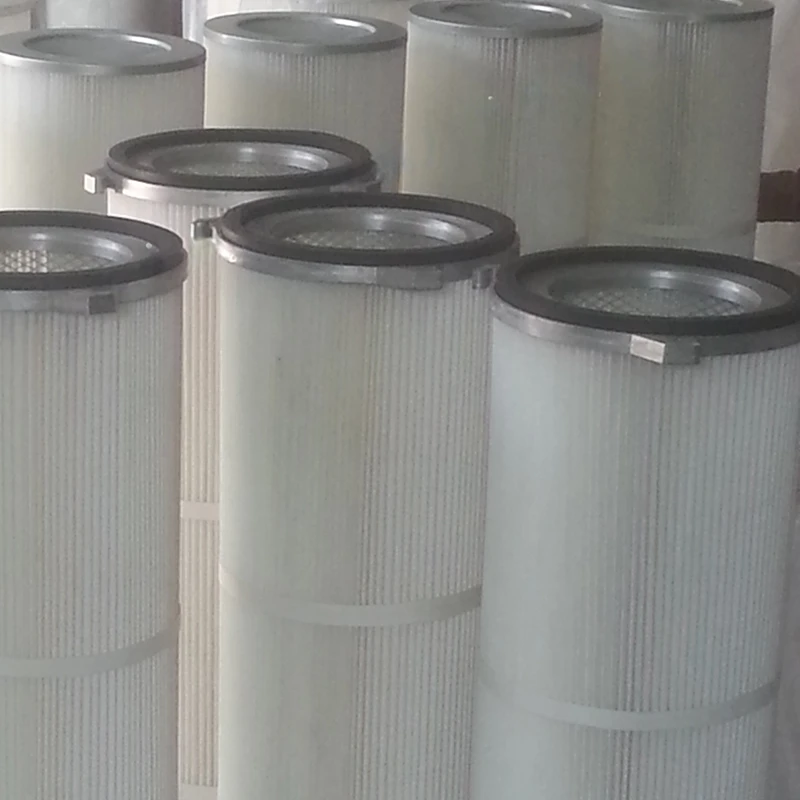
The structural integrity of a high-efficiency filter depends on the synergy between the base material and the surface treatment. Typically, these cartridges utilize polyester as the primary base due to its inherent mechanical strength and wear resistance. This foundation provides the necessary rigidity to withstand pulse-jet cleaning cycles without premature tearing.
To enhance this base, manufacturers often incorporate imported composite long-fiber spunbond polyester non-woven fabrics. This layered approach ensures that the cartridge can handle significant airflow while maintaining a stable geometric shape under varying pressure loads.
The Role of PTFE Coating in Filtration Logic
Surface filtration is a distinct shift from depth filtration. By applying a Polytetrafluoroethylene (PTFE) film to the polyester base, the filter cartridge stops particulates on the surface rather than allowing them to penetrate the fabric interstices. This prevents "blinding," where particles become permanently lodged within the media.
The chemical stability of PTFE is a critical advantage. It allows the filter to operate in environments where acids or alkalis might otherwise degrade standard polyester fibers. This coating also reduces the friction between the dust cake and the filter surface, which significantly lowers the energy required for cleaning.
Consequently, the combination of a polyester core and a PTFE membrane results in a product that offers both the physical durability of a heavy-duty fabric and the precision of a high-end membrane.
Efficiency vs. Pressure Drop Trade-offs
In any air purification system, there is an inherent tension between filtration efficiency and resistance loss (pressure drop). High-efficiency filters often create a tighter barrier, which can force the system's fans to work harder, increasing energy consumption.
The optimal filter design achieves a "stable resistance" state where the PTFE coating allows for high capture rates of particles above 0.3μm without causing an exponential spike in pressure drop over time.
By maintaining a smooth surface, coated cartridges facilitate easier dust release during the cleaning phase. This ensures that the flow rate remains consistent throughout the service interval, directly impacting the overall operational cost of the facility.
Performance Metrics for Fine Particulates
Quantifying the effectiveness of a filter requires looking at capture efficiency across different micron levels. For ultra-fine dust, the effectiveness of the PTFE membrane becomes the primary driver. While standard media may struggle with sub-micron particles, coated versions often maintain efficiencies exceeding 99.8% for particles above 0.3μm.
This precision is vital for industries where airborne contaminants can affect product purity or worker health. The ability to maintain these levels without a massive increase in resistance is what differentiates professional-grade cartridges from generic alternatives.
Figure 2. Relative Filtration Performance Index
Industrial Application Scenarios
These filter cartridges are predominantly utilized in high-emission industrial processes. In welding smoke extraction and shot blasting casting, the particles are often abrasive and varied in size. The mechanical strength of the polyester base prevents the abrasive dust from wearing through the filter too quickly.
Furthermore, in the pharmaceutical, cement, and textile industries, the requirement for sterile or high-purity air makes the 99.99% filtration efficiency (at 2µm) a necessity. The modular design typically employed in these products allows for rapid replacement, minimizing downtime in 24/7 production cycles.
Evolving Standards in Air Purification
The regulatory landscape for industrial emissions is becoming increasingly stringent. Companies are now required to monitor not just total suspended particulates (TSP), but the specific concentration of PM2.5 and ultra-fine dust. This has pushed the industry away from traditional felt filters toward membrane-coated solutions.
Modern air purification is moving toward "intelligent" filtration, where the lifespan of the cartridge is extended through precise cleaning cycles. Coated polyester media is ideal for this because its predictable pressure-drop curve allows for more accurate sensor-based cleaning triggers.
As environmental standards tighten, the focus is shifting from "how much can we filter" to "how efficiently can we filter with the lowest carbon footprint." This makes the low resistance and long life of coated cartridges an economic as well as an environmental choice.
Selection Framework for Filter Media
Choosing the right filter requires a detailed analysis of the operating environment. Parameters such as the temperature range (typically -30°C to 105°C for these materials) and the chemical nature of the dust must be cross-referenced with the media's properties.
A common mistake is selecting a filter based solely on the initial filtration efficiency without considering the "cake release" properties. If the dust is sticky or cohesive, a standard polyester filter will clog rapidly, whereas a PTFE-coated version will maintain its flow rate.
The following framework provides a comparison of how different operational factors influence the suitability of coated polyester cartridges compared to standard alternatives.
| Operating Factor | Standard Polyester | PTFE Coated Polyester | Impact on Lifecycle |
|---|---|---|---|
| Dust Particle Size | Effective for >5μm | Effective for >0.3μm | Higher precision reduces emissions |
| Cleaning Frequency | High (Deep clogging) | Low (Surface release) | Lower energy consumption |
| Chemical Exposure | Moderate resistance | High stability | Extended replacement intervals |
| Pressure Stability | Rapid increase | Gradual increase | Consistent system airflow |
| Initial Cost | Low | Moderate to High | Amortized by longer life |
| Maintenance Effort | High replacement rate | Simplified maintenance | Reduced operational downtime |
Questions & Answers
The primary difference is the addition of a thin, high-performance film—usually PTFE—on the surface of the polyester base. While standard filters rely on depth filtration (trapping particles inside the fabric), coated filters utilize surface filtration. This prevents particles from embedding deeply into the media, allowing for much more efficient cleaning and a significantly longer service life, especially when dealing with ultra-fine dust.
They are most effective in environments with high concentrations of fine or abrasive dust. Typical applications include welding fume extraction, shot blasting, pharmaceutical powder processing, and cement production. In these scenarios, the combination of high mechanical strength from the polyester and the non-stick properties of the PTFE coating ensures the air remains pure while the equipment operates efficiently.
Selection should be based on the required flow rate (m3/h), available filtration area (m2), and the physical dimensions of your housing (Outer Diameter and Height). For example, a cartridge like the AR-3260 is designed for specific airflow and pressure needs. You must ensure the operating temperature of your process falls within the -30°C to 105°C range typically supported by these materials.
Yes, typically. Because coated filters maintain a lower and more stable pressure drop over time, the system fans do not have to work as hard to pull air through the media. By reducing the resistance loss, the energy required for the filtration process is decreased, leading to lower electricity costs and reduced wear on the motor.
While the exact lifespan depends on the dust load and cleaning frequency, coated cartridges generally last significantly longer than uncoated versions. Their resistance to abrasion and the ease with which they release dust cakes prevent the permanent clogging (blinding) that typically ends the life of a standard polyester filter.
The PTFE coating provides excellent chemical stability, offering a layer of protection against many acids and alkalis. However, it is important to verify the compatibility of both the coating and the polyester base with the specific chemicals present in your air stream to ensure there is no degradation of the internal structural fibers.
Final Thoughts
Optimizing industrial air purification requires a strategic move toward materials that offer more than just a physical barrier. The integration of PTFE coatings on polyester bases represents a sophisticated response to the demand for higher efficiency and lower operational costs.
By focusing on surface filtration and chemical resilience, enterprises can ensure environmental compliance and improve production efficiency. The long-term value of investing in high-specification filtration media far outweighs the initial cost through reduced downtime and energy savings.


