
- 2026-11-16
Stainless Steel Filter Cartridge Technical Performance Analysis
When industrial filtration fails, the result is often a cascading series of costly operational shutdowns and compromised product purity. In high-demand environments where chemical aggression and thermal stress are constants, the choice of filter media becomes the primary determinant of system uptime.
While many facilities rely on standard synthetic options, there is a growing shift toward high-durability materials to mitigate the risks of premature tearing and chemical degradation. The ability to maintain consistent flow rates while capturing sub-micron particles is no longer an advantage—it is a baseline requirement for modern environmental control.
Understanding the technical trade-offs between various high-performance options, including the stainless steel filter cartridge and advanced coated polyester alternatives, allows engineers to optimize their dust removal strategies for long-term sustainability.

Material Foundations in Air Purification
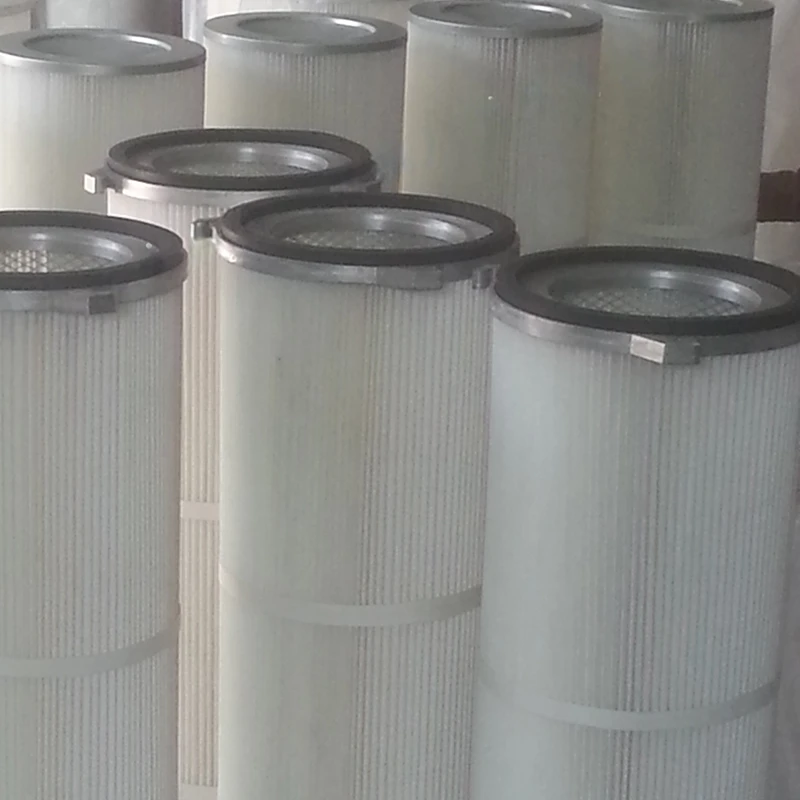
The foundation of any effective air purification system lies in the base material's mechanical strength. In most industrial applications, polyester serves as the structural backbone due to its inherent wear resistance and stability. However, base polyester alone often lacks the precision needed for ultra-fine particulate capture.
To bridge this gap, manufacturers integrate specialized membranes or utilize composite long-fiber spunbond polyester non-woven fabrics. This approach ensures that the cartridge can withstand the physical stress of pulse-jet cleaning while maintaining a precise pore structure for consistent filtration.
The Mechanics of PTFE Coating Technology
Polytetrafluoroethylene (PTFE) coating represents a significant leap in filtration efficiency. By applying a thin, high-performance film over the polyester base, the filtration mechanism shifts from depth filtration—where particles are trapped inside the material—to surface filtration. This prevents particles from embedding themselves deep within the fabric, a phenomenon known as "blinding."
The chemical stability of PTFE is paramount. It provides an inert barrier that resists erosion from acids and alkalis, making it indispensable in chemical processing and pharmaceutical environments. Furthermore, the smooth surface of the coating reduces the adhesion of sticky or oily dust, which significantly lowers the energy required for cleaning cycles.
From a technical perspective, this coating allows for a higher filtration accuracy without a proportional increase in pressure drop. The result is a filter that can capture particles as small as 0.3μm with efficiencies often exceeding 99.8%, ensuring that downstream equipment remains protected from abrasive contaminants.
Critical Performance Metrics for Industrial Filters
Evaluating a filter's effectiveness requires a move beyond simple micron ratings. Engineers must consider the interplay between filtration area, flow rate, and operating temperature. For instance, a cartridge with a larger surface area can handle higher dust loads and maintain a lower differential pressure, thereby extending the interval between replacements.
True filtration efficiency is not a static number but a balance between capture rate and resistance loss; the objective is to maximize the interception of ultra-fine dust while minimizing the energy cost of air movement.
Temperature resilience is another critical factor. Polyester materials are typically rated for ranges between -30°C and 105°C. When these limits are exceeded, the material can lose structural integrity, leading to leaks or catastrophic failure. Therefore, matching the material specification to the actual process temperature is a non-negotiable step in system design.
Efficiency vs. Resistance Trade-offs
The primary challenge in dust removal is the inverse relationship between filtration efficiency and air permeability. Traditionally, increasing the density of the filter media to capture smaller particles would result in a higher pressure drop, increasing the load on fans and compressors.
However, the adoption of PTFE-coated media has disrupted this trend. By optimizing the membrane's porosity, it is possible to achieve near-absolute filtration of 2μm particles while keeping the resistance loss low. This enables a stable filtration efficiency over long periods, reducing the overall operational cost.
Figure 2. Relative Performance Index of Filtration Media
Operational Application Scenarios
In a typical industrial setting, such as welding smoke extraction or shot blasting casting, the filter must handle a high volume of abrasive and fine particles. In these scenarios, the modular design of coated polyester cartridges allows for rapid replacement, minimizing downtime. The ability to resist tearing and scratching from powder particles ensures that the integrity of the filtration barrier is maintained under heavy loads.
For more specialized sectors like pharmaceuticals and textiles, the focus shifts toward purity and the prevention of cross-contamination. Here, the corrosion resistance of PTFE becomes critical, as the system may be exposed to various cleaning agents or acidic by-products. By utilizing high-precision cartridges, these industries can maintain air quality standards that protect both the product and the personnel.
Evolution of Dust Removal Requirements
Industrial air purification is moving toward a "zero-emission" philosophy, driven by stricter environmental regulations globally. This shift requires filters that can handle ultra-fine dust above 0.3μm with near-perfect efficiency. The transition from basic depth filters to advanced surface-coated membranes is a direct response to these regulatory pressures.
Furthermore, the demand for energy efficiency is forcing a redesign of the filtration cycle. Reducing the resistance loss (pressure drop) across the filter cartridge directly reduces the electricity consumption of the entire plant. Modern solutions now prioritize "low-resistance" materials that do not sacrifice capture efficiency.
Future developments are likely to focus on "smart" filtration, where sensors monitor the pressure differential in real-time to trigger cleaning only when necessary. This will further extend the service life of the cartridges and reduce the mechanical wear caused by unnecessary pulse-cleaning cycles.
Selection Framework for Filter Media
Selecting the right cartridge requires a balanced analysis of the contaminant type, the chemical environment, and the required lifecycle. A mistake in material selection—such as using standard polyester in a high-acid environment—can lead to rapid degradation and frequent, costly replacements.
For those evaluating high-performance options, comparing the relative suitability of different media is essential. While a stainless steel filter cartridge offers extreme durability and heat resistance, PTFE-coated polyester provides a superior balance of ultra-fine capture and flow rate for general industrial dust.
The following framework illustrates how to align technical requirements with the most appropriate filtration technology based on operational constraints.
| Requirement Factor | Standard Polyester | PTFE Coated Poly | Sintered Metal |
|---|---|---|---|
| Particle Size Capture | Medium (5-10μm) | Ultra-fine (>0.3μm) | Fixed Pore Size |
| Chemical Resistance | Basic | High (Acid/Alkali) | Very High |
| Pressure Drop | Moderate | Low | Moderate to High |
| Service Life | Short to Medium | Long (Easy Clean) | Very Long |
| Cleaning Method | Pulse-Jet | High-Efficiency Pulse | Backwash/Chemical |
| Typical Application | General Dust | Pharmaceuticals/Welding | Extreme Heat/Chemical |
Questions & Answers
PTFE coating creates a smooth, non-stick surface that facilitates surface filtration. Instead of particles becoming embedded within the polyester fibers (depth filtration), they collect on the surface. This makes the "dust cake" much easier to remove during cleaning cycles, which prevents permanent blinding of the media and significantly reduces the mechanical wear on the fabric, thereby extending the overall service life of the cartridge.
Depth filtration traps particles throughout the thickness of the filter medium, which can lead to a gradual increase in pressure drop as the internal pores fill up. Surface filtration, enabled by membranes like PTFE, captures particles exclusively on the exterior layer. This allows for more efficient cleaning, higher capture rates for ultra-fine particles, and a more consistent flow rate over time.
The decision should be based on three main factors: operating temperature, chemical exposure, and required filtration precision. Stainless steel is ideal for extreme heat and highly corrosive environments where synthetic fabrics would melt or dissolve. However, for ultra-fine dust removal (sub-micron level) and lower air resistance, PTFE-coated polyester is generally more effective and cost-efficient.
Yes, provided the correct material is selected. PTFE-coated cartridges offer excellent hydrophobic properties, which prevent moisture from clinging to the filter media. This is critical in environments where dust may become damp or "muddy," as it prevents the formation of a waterproof seal on the filter surface that would otherwise block airflow.
The filtration area is directly proportional to the system's capacity to handle dust loads without a spike in pressure. A larger surface area reduces the "face velocity" of the air passing through the media, which leads to lower resistance loss and reduces the frequency of cleaning pulses. This not only saves energy but also minimizes the stress on the filter material, extending its operational life.
For high-quality coated polyester filter cartridges, the efficiency for particles above 0.3μm typically exceeds 99.8%. Specifically, for particles around 2μm, the efficiency is often recorded at 99.99%. This level of precision is necessary for industries that must comply with strict air quality regulations or protect sensitive downstream electronic components.
Final Thoughts
Optimizing industrial air purification is not about finding the "best" filter, but the most compatible one. Whether the operational demand requires the extreme durability of a stainless steel filter cartridge or the high-efficiency capture of PTFE-coated polyester, the goal remains the same: maximizing uptime while minimizing environmental impact.
By focusing on the intersection of material science and operational reality, facilities can transition from reactive maintenance to a strategic filtration lifecycle. This approach not only ensures regulatory compliance but directly enhances the bottom line through energy savings and reduced downtime.


