- Email: [email protected]
- Phone: (+86)13363300602

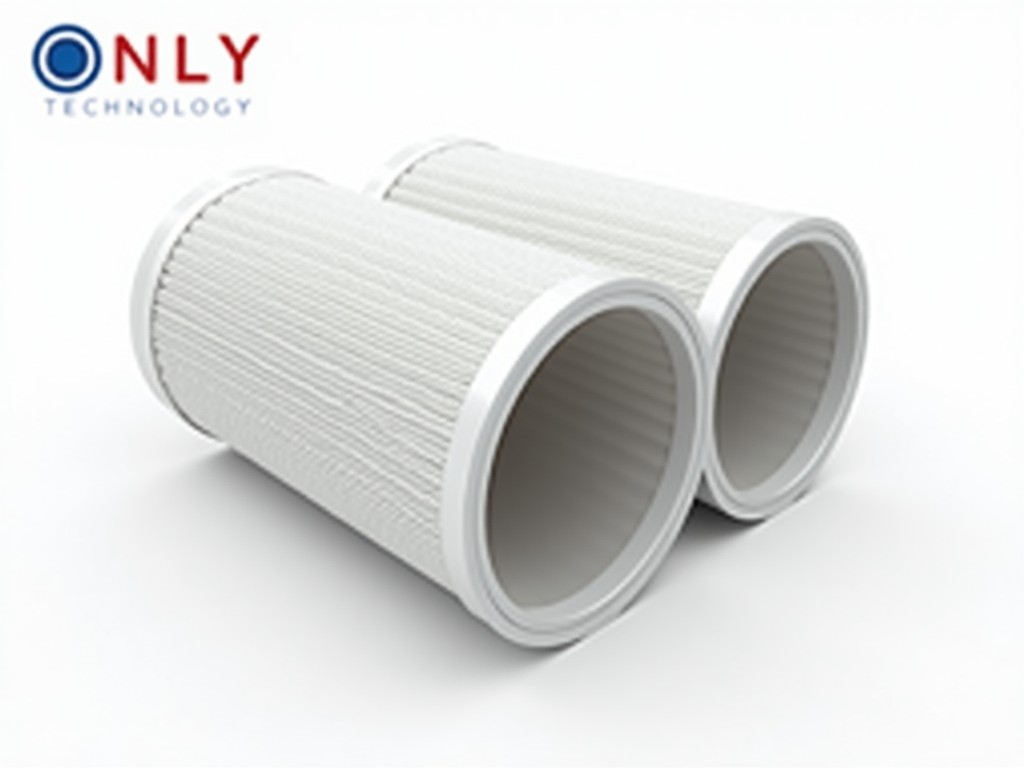
Activated carbon air filter cartridges are cylindrical elements designed to remove gaseous pollutants, odors, and volatile organic compounds from airflow through adsorption. The performance depends
Request a QuoteActivated carbon air filter cartridges are cylindrical elements designed to remove gaseous pollutants, odors, and volatile organic compounds from airflow through adsorption. The performance depends on the carbon’s pore structure, surface chemistry, and cartridge geometry, which together determine breakthrough capacity and pressure drop. Suppliers in China manufacture these cartridges using standardized tooling while allowing adjustments to length, diameter, and end‑cap configuration to meet specific OEM requirements.
| Parameter | Typical Value | Unit |
|---|---|---|
| Outer Diameter | 100 – 150 | mm |
| Inner Diameter | 30 – 50 | mm |
| Length | 200 – 1000 | mm |
| Activated Carbon Type | Coal‑based, coconut shell, wood | – |
| Iodine Number | 800 – 1200 | mg/g |
| Bulk Density | 0.4 – 0.5 | g/cm³ |
| Initial Pressure Drop (at 0.5 m/s) | 30 – 80 | Pa |
| Adsorption Capacity (toluene) | 150 – 250 | mg/g |
| Service Life (continuous) | 3000 – 8000 | hours |
In semiconductor fabs, activated carbon cartridges protect photolithography tools by capturing molecular contaminants that could degrade wafer yield. In paint booths, they adsorb solvent vapors before exhaust, reducing emission‑control load on downstream scrubbers. For indoor air handling units in data centers, the cartridges minimize gaseous corrosion‑inducing substances, extending equipment lifespan. Each application exploits the cartridge’s high surface area and tailored pore distribution to target specific molecular sizes and polarities.
Each batch undergoes iodine number testing to confirm adsorption potential, followed by mercury intrusion porosimetry to verify pore‑size distribution. Dimensional inspection ensures outer and inner tolerances stay within ±0.2 mm, preventing bypass flow. Pressure‑drop measurements are performed at standardized face velocity to confirm cartridge integrity before packing. Final visual inspection checks for carbon settlement, end‑cap alignment, and absence of foreign particles.
Q: Can the cartridge length be customized to non‑standard sizes?
A: Yes, lengths can be adjusted in 5 mm increments; tooling changes may apply for lengths beyond the standard range.
Q: What information is needed to obtain a quotation?
A: Required details include target flow rate, contaminant species and concentration, pressure‑drop limit, cartridge dimensions, and any preferred carbon type or impregnation.
Q: How is quality consistency verified across batches?
A: Each lot is accompanied with a test report showing iodine number, bulk density, and pressure‑drop results; statistical process control ensures variation stays within ±5 %.
Q: What packaging options protect against moisture during sea freight?
A: Cartridges are packed in moisture‑barrier bags with silica gel, then placed in sealed cartons; optional vapor‑phase corrosion inhibitors can be added for extended transit.
To discuss your specific air‑filtration requirements and receive a detailed technical proposal, please contact our sales team.
Request a QuoteCopyright © 2026 www.chinacartridgefilter.com All Rights Reserved.