- Email: [email protected]
- Phone: (+86)13363300602

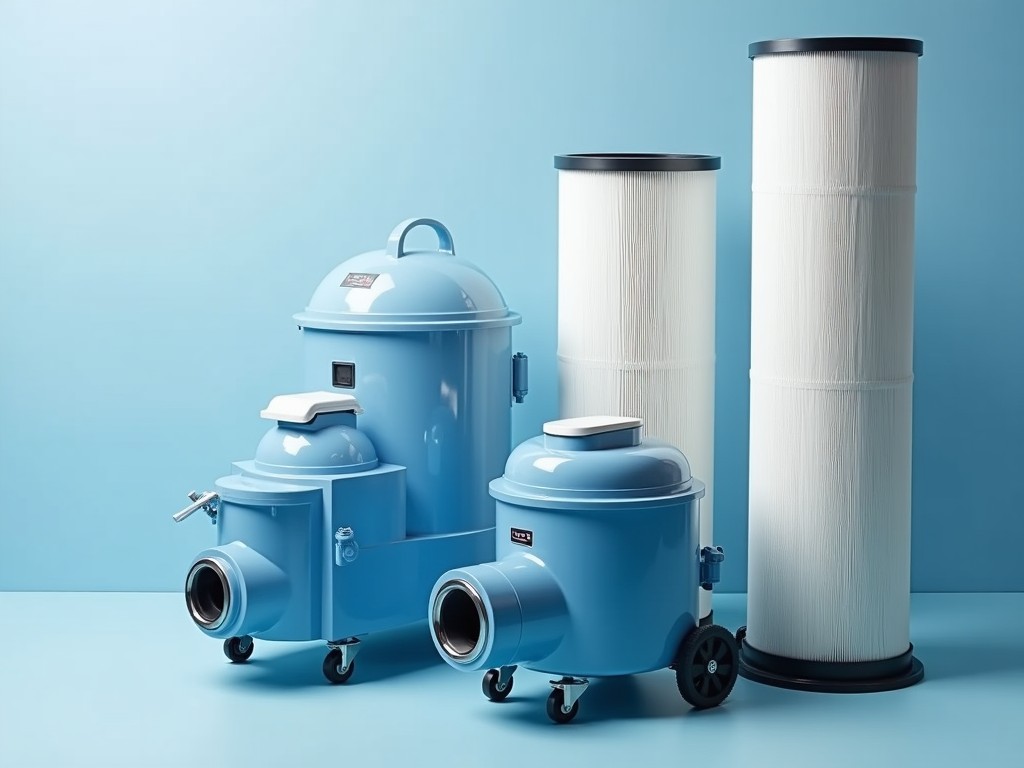
Looking for a durable vacuum cleaner cartridge filter? Our factory offers OEM dust filter cartridges with cellulose-polyester media. Contact for bulk pricing!
Request a QuoteA cartridge dust filter is a replaceable element that sits inside the airflow path of an industrial vacuum cleaner, capturing particulate matter before it reaches the motor or exhaust.
Its design balances high dust holding capacity with low pressure drop, allowing the vacuum to maintain suction while protecting downstream components from abrasive wear.
Because the filter is exposed to varying dust loads, its construction must resist deformation, moisture, and temperature fluctuations encountered in continuous duty cycles.
The filter media is typically a laminated blend of cellulose and synthetic polyester fibers, providing a matrix that captures both coarse and fine particles while offering tensile strength.
Optional surface treatments such as a PTFE coating can improve moisture resistance and reduce particle adhesion, extending service life in humid environments.
Cellulose‑polyester blend (standard)
PTFE‑coated cellulose‑polyester (hydrophobic)
Pure polyester media (high temperature up to 150 °C)
Galvanized steel core for radial rigidity
ABS or polypropylene end caps for chemical compatibility
Closed‑cell foam gasket for sealing against housing
Selecting a media with higher synthetic fiber content increases resistance to chemical attack, while a steel core prevents collapse under high differential pressure.
Performance is expressed in terms of capture efficiency at specific particle sizes and the resulting pressure drop at a defined airflow rate.
| Parameter | Typical Value | Unit | Note |
|---|---|---|---|
| Filter Media Type | Cellulose‑polyester blend | – | Optional PTFE coating available |
| Capture Efficiency (0.3 µm) | 85 – 92 | % | Measured per ISO 16890‑1 |
| Capture Efficiency (1‑10 µm) | 95 – 99 | % | Typical for coarse dust |
| Pressure Drop at 2 m³/min | 1.2 – 1.8 | kPa | Dependent on media thickness |
| Max Operating Temperature | 120 (standard) / 150 (HT polyester) | °C | Limited by end‑cap material |
| Burst Strength | ≥ 250 | kPa | Tested per ASTM F2299 |
| Nominal OD × Length | 140 × 300 (customizable) | mm | Other diameters 100‑200 mm available |
| End‑Cap Material | ABS, PP, or galvanized steel | – | Selected per chemical compatibility |
Values shown are typical ranges; actual performance is confirmed during prototype testing and can be adjusted by altering media density or core geometry.
Cartridge filters are manufactured to order, allowing adjustments to dimensions, media composition, end‑cap material, and sealing features without redesigning the housing.
Length: 150 mm to 600 mm in 25 mm increments
Outer diameter: 100 mm to 200 mm
Media blend ratio: cellulose : polyester from 70:30 to 30:70
Optional PTFE or antimicrobial coating
End‑cap material: ABS, polypropylene, or galvanized steel
Gasket profile: round, square, or custom extruded
All variants retain the same burst strength rating because the core geometry and end‑cap attachment are validated for each size combination.
Each production lot undergoes a series of inspections to verify that the filter meets the agreed performance envelope before shipment.
Raw material certificate review (media, core, end caps)
Media integrity test – bubble point or permeability measurement
Dimensional verification – OD, ID, length, squareness
Pressure drop test at rated airflow using calibrated manometer
Efficiency challenge with aerosol generator (NaCl or oil mist) and particle counter
Visual inspection for media tears, end‑cap flash, gasket seating
Test results are retained in a traceable batch record, enabling root‑cause analysis if a field performance deviation is reported.
In central vacuum systems serving machining cells, the filter captures metal swarf and grinding dust that would otherwise abrasively wear motor bearings.
In woodworking shops, fine sawdust is retained at high efficiency, reducing explosion risk and maintaining visibility in the work area.
Pharmaceutical and food‑processing facilities specify antistatic, low‑outgassing media to satisfy cleanroom classification while allowing frequent filter change‑over.
Minimum order quantity is typically 50 pieces for standard geometries; lower volumes are available for prototype runs upon request.
Standard lead time for non‑customized cartridges is 2‑3 weeks; projects requiring special media coatings or non‑standard diameters extend to 4‑5 weeks.
Individual cartridges packed in polyethylene bags with desiccant
Bulk packs of 10‑20 units in corrugated cartons with corner protection
Palletized shipments with stretch‑wrap and humidity indicator cards
All packaging is designed to prevent media deformation during transit and to keep the filter dry until installation.
Yes. Outer diameter, length, and inner diameter (if a perforated core is used) can be adjusted within the tooling limits; a drawing or physical sample is required to confirm fit.
Required details include: desired dimensions, media type (or performance target), end‑cap material, gasket style, order quantity, and any special certification (e.g., RoHS, REACH).
Samples are shipped in protective packaging with a short‑term performance data sheet; the customer covers freight, and the sample cost is credited toward the first production order.
To discuss your specific dust‑filtration requirements, request a quotation, or obtain technical datasheets, please reach out using the link below.
Copyright © 2026 www.chinacartridgefilter.com All Rights Reserved.