- Email: [email protected]
- Phone: (+86)13363300602

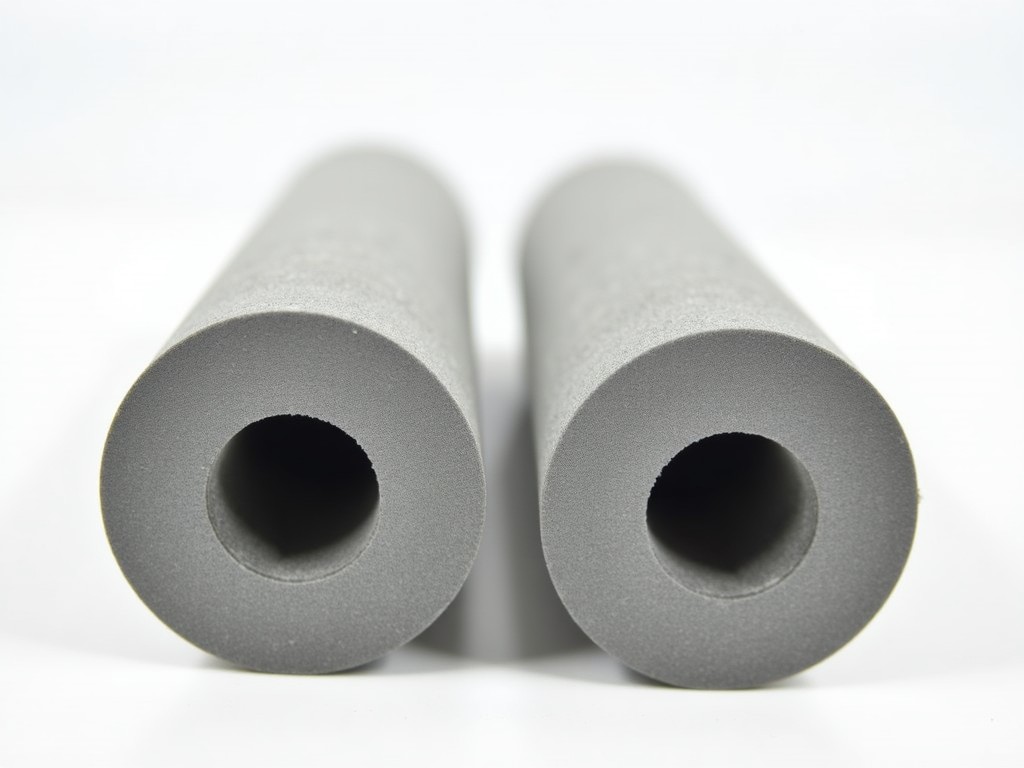
This overview explains how sintered stainless steel cartridges are produced, why the process matters for filtration efficiency, and what technical details buyers should evaluate before specifying a
Request a QuoteThis overview explains how sintered stainless steel cartridges are produced, why the process matters for filtration efficiency, and what technical details buyers should evaluate before specifying a part.
Cartridges are made from austenitic stainless steel powders (typically 304L or 316L) with a controlled particle size distribution ranging from 10 µm to 45 µm.
During sintering, the powder compact is heated just below the melting point, allowing diffusion bonding that creates interconnected pores while preserving corrosion resistance.
Porosity is adjusted by varying the compacting pressure and sintering temperature, yielding pore sizes from 2 µm for fine filtration to 20 µm for coarse pre‑filters.
The furnace operates in a hydrogen‑rich atmosphere to prevent oxidation, with a temperature profile that ramps to 1200 °C–1350 °C depending on alloy.
After sintering, a controlled cool‑down minimizes thermal stresses, resulting in a flexural strength typically above 150 MPa and a burst pressure rating suitable for high‑flow industrial systems.
Dimensional tolerance after sintering is held to ±0.1 mm on outer diameter and ±0.2 mm on length, which simplifies housing design.
Pressure drop across a clean cartridge follows the Darcy‑Forchheimer equation, allowing engineers to predict flow resistance based on porosity and thickness.
For a 5 µm rated cartridge at 1 bar differential pressure, water flow rates typically range from 15 L/min to 40 L/min depending on cartridge length (100 mm–500 mm).
The stainless steel medium retains integrity at temperatures up to 400 °C and in pH ranges from 2 to 12, making it suitable for chemical, oil & gas, and food‑process streams.
Outer diameter can be selected from 20 mm, 25 mm, 30 mm, or 40 mm to match existing housings.
Lengths are offered in 50 mm increments from 100 mm up to 1000 mm, with custom lengths available upon request.
End connections include threaded (NPT, BSP), flanged (ANSI, DIN), or custom adapters such as quick‑release clamps.
Surface treatments like electropolishing or passivation can be specified to enhance corrosion resistance in aggressive media.
In petrochemical refineries, these cartridges protect catalyst beds by removing particulates that could cause fouling or mechanical damage.
Food and beverage manufacturers use them for sterile filtration of liquids where stainless steel compliance with 3‑A standards is required.
Power generation plants install them in boiler feedwater systems to capture corrosion products before they reach turbines.
Because the medium is reusable after back‑washing or ultrasonic cleaning, facilities achieve lower lifetime cost compared with disposable polymer filters.
Each batch undergoes pore size verification using bubble point testing per ASTM F316.
Dimensional inspection is performed with calibrated CMMs to confirm OD, ID, and length tolerances.
Burst pressure is measured by hydrostatic testing to 1.5× the rated operating pressure, ensuring a safety margin.
Material traceability is maintained through mill certificates linked to each production lot.
| Parameter | Typical Value | Unit | Notes |
|---|---|---|---|
| Stainless Steel Grade | 304L / 316L | – | Select based on corrosion needs |
| Nominal Pore Size | 2 – 20 | µm | Customizable per application |
| Porosity | 35 – 55 | % | Affects flow rate and dirt holding capacity |
| Maximum Operating Temperature | 400 | °C | Limited by gasket material if applicable |
| Burst Pressure (minimum) | 10 | bar | Measured at room temperature |
| Length Tolerance | ±0.2 | mm | Applies to standard lengths |
Yes, outer diameter, length, and end connections can be tailored to fit specific housings; provide detailed drawings or requirements for a quote.
We need the desired filtration rating (pore size), operating pressure and temperature, fluid compatibility, cartridge dimensions, and any preferred end fittings.
Standard grades are 304L and 316L stainless steel; specialty alloys such as 904L or duplex can be supplied upon request.
Each lot receives bubble point, dimensional, burst pressure, and visual inspection; certificates of conformance are provided with shipment.
Cartridges are packed in anti‑static polyethylene bags, placed in corrugated cartons with foam inserts, and sealed for export; palletization is available for bulk orders.
We use moisture‑barrier liners and comply with ISPM‑15 wood packaging standards to prevent customs delays.
Lead times range from 3 to 5 weeks for standard configurations; custom orders may require additional time for tooling and validation.
Sample cartridges can be shipped after receipt of a signed NDA and specification confirmation; shipping costs are borne by the requester.
To discuss your filtration requirements, request a quotation, or obtain technical data sheets, please reach out via our contact form.
Submit an inquiry and aplications engineer will respond within one business day.
Copyright © 2026 www.chinacartridgefilter.com All Rights Reserved.