- Email: [email protected]
- Phone: (+86)13363300602

Pleated filter cartridges made from water‑soluble solid matrices provide a temporary filtration barrier that can be removed in situ by controlled dissolution. The solid retainer maintains mechanical
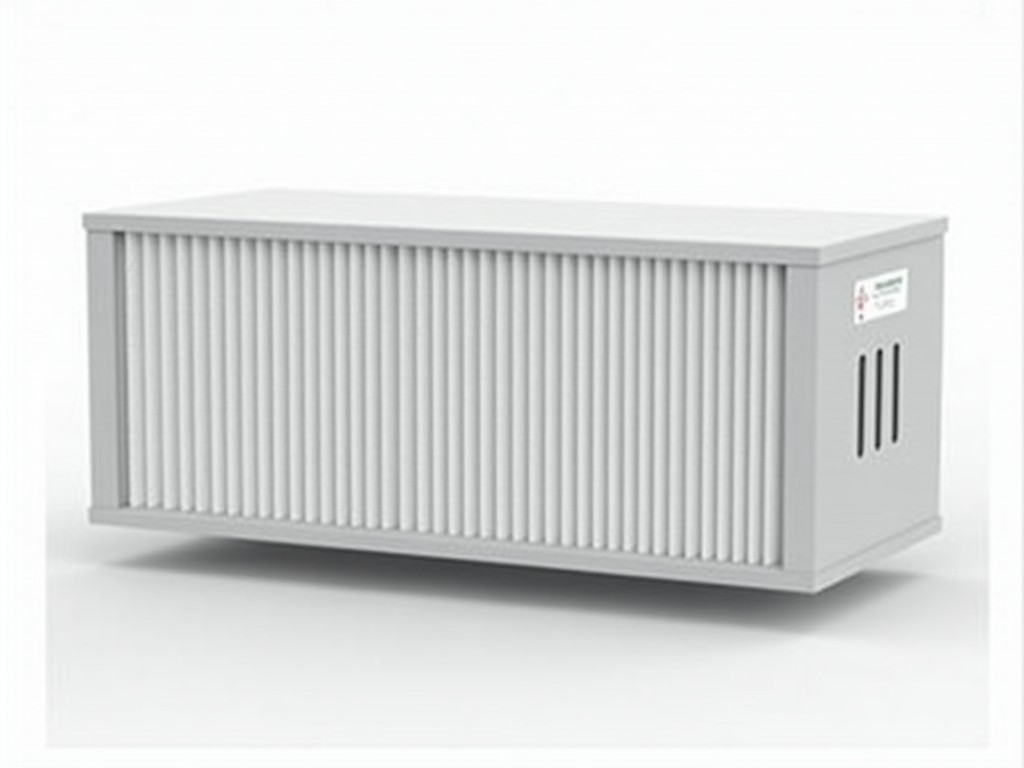
Request a QuotePleated filter cartridges made from water‑soluble solid matrices provide a temporary filtration barrier that can be removed in situ by controlled dissolution. The solid retainer maintains mechanical strength during operation, then dissolves to leave a clean conduit without generating secondary waste.
The cartridge core consists of a pleated laminate of inorganic salts (e.g., sodium carbonate, magnesium sulfate) blended with a water‑soluble polymer binder. Under normal process temperatures and pH the laminate remains insoluble, providing structural integrity. When exposed to a predetermined dissolution trigger—typically warm deionized water at 40‑60 °C—the binder hydrolyzes and the salts diffuse out, allowing the pleated structure to disintegrate and flush away.
Key geometric and performance variables that can be tailored to the application:
| Parameter | Typical Range / Options |
|---|---|
| Outer Diameter | 20 mm – 150 mm (custom sizes available) |
| Effective Length | 50 mm – 1000 mm (step increments of 25 mm) |
| Pleat Height | 1 mm – 5 mm (affects surface area and pressure drop) |
| Dissolution Trigger Temperature | 35 °C – 60 °C (based on salt/polymer blend) |
| End‑Cap Type | Open, closed, NPT threaded, sanitary tri‑clamp, custom flange |
| Surface Finish | Standard (as‑melted), optionally polished for low‑fouling applications |
In pharmaceutical manufacturing, the cartridges serve as single‑use sterile filters that are flushed out after product transfer, eliminating cleaning validation steps. In food‑and‑beverage processing, they provide a temporary barrier for pulp or pulp‑like particulates, dissolving after the batch to avoid cross‑contamination. In chemical plants, they protect downstream equipment from catalyst fines during a reaction quench, then disappear when the aqueous work‑up is initiated.
Each lot undergoes dimensional verification (OD, length, pleat geometry) using optical comparators, burst pressure testing to confirm mechanical integrity under design differential pressure, and dissolution time testing in a calibrated bath at the specified trigger temperature. Visual inspection checks for pleat uniformity and end‑cap sealing. Documentation includes a material certificate of conformity and a test report summarizing the above metrics.
Yes. Outer diameter, length, pleat height and end‑cap configuration are all defined per customer drawing or specification.
Required data include: desired OD and length, pleat height (or target surface area), dissolution temperature window, end‑cap type, material preference (if any), and expected order quantity.
Standard blends are sodium carbonate‑polymer, magnesium sulfate‑polymer, and calcium chloride‑polymer. Custom blends can be formulated to meet specific dissolution temperatures or chemical compatibility requirements.
Inspection includes dimensional checks, burst pressure testing, dissolution time verification, and visual inspection of pleat uniformity and end‑cap seals.
Cartridges are packed in sealed polyethylene bags with desiccant, then placed in corrugated cartons. For export, palletized shipments include moisture‑barrier wrapping and shock‑absorbent corner protectors.
Copyright © 2026 www.chinacartridgefilter.com All Rights Reserved.