- Email: [email protected]
- Phone: (+86)13363300602

When selecting a replacement cartridge for industrial dust collectors, the key performance parameters are filtration efficiency, pressure drop, media durability, and dimensional compatibility with
Request a QuoteWhen selecting a replacement cartridge for industrial dust collectors, the key performance parameters are filtration efficiency, pressure drop, media durability, and dimensional compatibility with the housing. Understanding these factors reduces the risk of premature filter failure and unscheduled downtime.
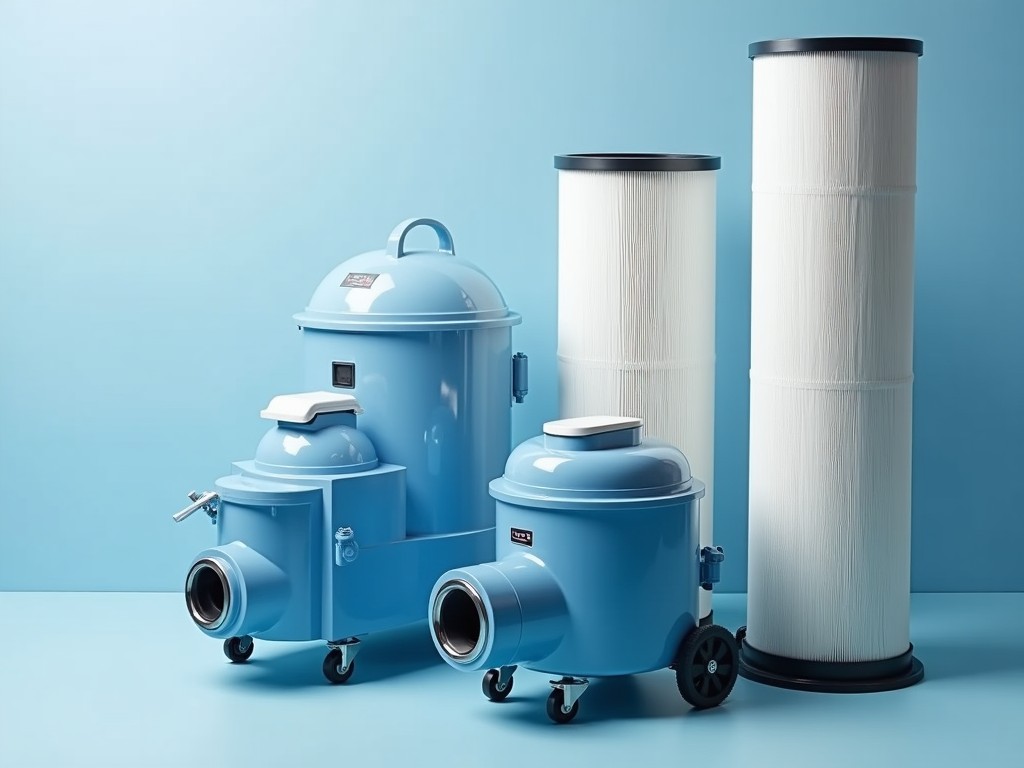
A typical cartridge consists of a pleated filter media sealed to a metal or polymer end cap, with a center core that provides structural support. Pleat height, number of pleats, and media thickness determine the effective filtration area, which directly influences the airflow capacity before a given pressure drop is reached.
| Parameter | Typical Range | Unit |
|---|---|---|
| Filtration efficiency (ISO 16890) | 99.0 – 99.9 | % @ 0.3 µm |
| Initial pressure drop | 150 – 250 | Pa at 0.5 m/s face velocity |
| Media type | Cellulose, polyester, nanofiber blend | – |
| Maximum continuous temperature | 80 – 120 | °C |
| Standard outer diameter | 325 – 350 | mm |
| Standard length | 600 – 1200 | mm |
In metalworking shops, cartridges protect workers from metal fumes generated during grinding and cutting; the pleated design accommodates the high burst flow rates of cyclone pre‑separators.
In woodworking facilities, the cartridges capture fine sawdust that would otherwise penetrate standard bag filters, reducing explosion risk.
In pharmaceutical powder handling, the low‑extractable media prevents contamination of product streams while maintaining the required airflow for containment systems.
Cartridge geometry can be adjusted to match specific housing bolt patterns, flange types, or snap‑fit mechanisms.
Pleat depth is varied to trade off filtration area against pressure drop according to the fan curve of the dust collector.
End‑cap material (galvanized steel, stainless steel, or reinforced polypropylene) is selected based on the corrosiveness of the collected dust and cleaning method (pulse‑jet vs. reverse‑air).
Each production lot undergoes dimensional verification of outer diameter, length, and end‑cap squareness using calibrated calipers and coordinate‑measuring machines.
Media integrity is checked by bubble point testing to confirm pore size distribution.
A sample of cartridges is subjected to a simulated pulse‑jet cleaning cycle to measure pressure‑drop increase over 5000 cycles.
Results are recorded and available to customers upon request.
Can dimensions be customized? Yes, outer diameter, length, and end‑cap configuration are adjusted according to the collector’s housing drawings.
What information is required before quotation? Provide the dust collector model, required airflow (m³/h), maximum operating temperature, and any chemical exposure details.
Which media materials are available? Cellulose, polyester, cellulose‑polyester blends, and nanofiber‑enhanced media; availability depends on the project timeline.
How is quality inspected? Dimensional checks, bubble point testing, and accelerated pulse‑jet life testing are standard; additional tests can be added per customer specification.
What packaging methods are available? Cartridges are packed in corrugated boxes with internal dividers; palletization and heat‑shrink wrapping are offered for export shipments.
What is the typical production lead time? Lead time ranges from 2 to 4 weeks for standard configurations; customized items are quoted separately.
How are samples arranged? Samples can be dispatched after receipt of a technical data sheet and a purchase order for the sample quantity; shipping costs are borne by the requester.
To obtain a quotation that matches your dust collector’s specifications, please contact our technical sales team.
Request a quotationCopyright © 2026 www.chinacartridgefilter.com All Rights Reserved.