- Email: [email protected]
- Phone: (+86)13363300602

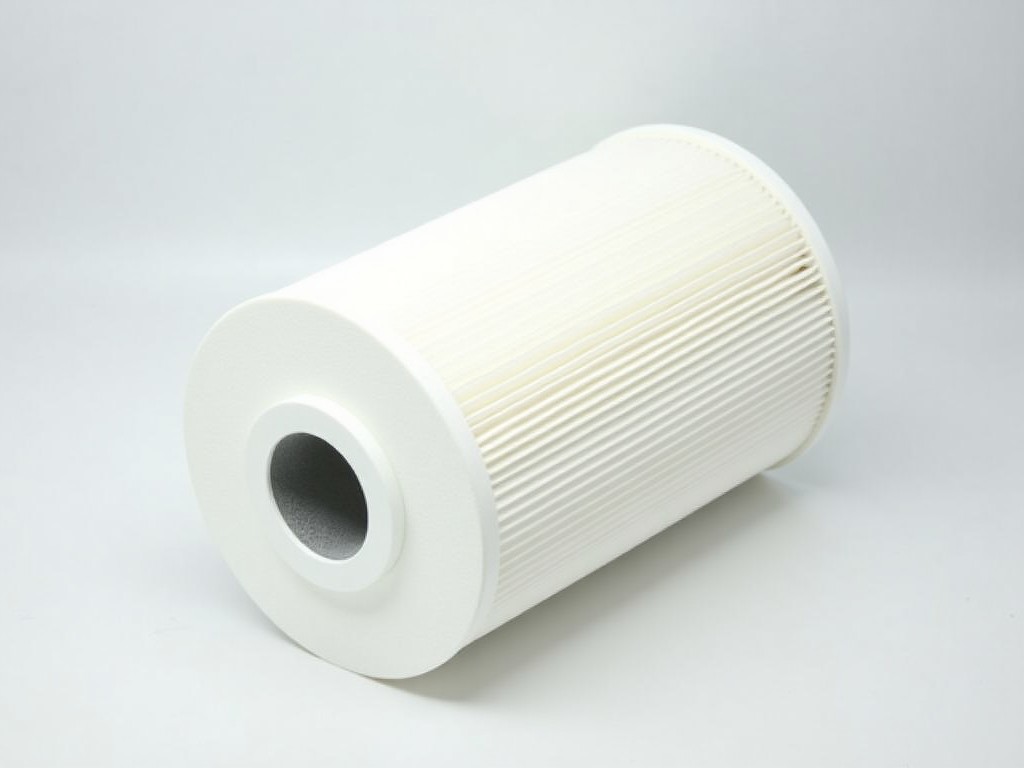
Sintered stainless steel pleated filter cartridges are manufactured by forming a pleated metal fiber matrix and then sintering the fibers at high temperature to create a rigid, porous structure. The
Request a QuoteSintered stainless steel pleated filter cartridges are manufactured by forming a pleated metal fiber matrix and then sintering the fibers at high temperature to create a rigid, porous structure.
The pleated design increases the effective filtration area compared to a flat sheet of the same diameter, allowing higher flow rates or longer service life before pressure drop becomes limiting.
Commonly used stainless steel grades are 304L and 316L, selected for their resistance to corrosion in aggressive chemical environments and compatibility with food‑grade or pharmaceutical processes.
Pleat height typically varies between 2 mm and 5 mm, with a pitch (distance between pleat centers) of 4 mm to 8 mm.
The resulting pleated stack provides a high surface‑area‑to‑volume ratio while maintaining structural integrity under differential pressure.
During sintering, the stainless steel fibers bond at contact points, forming a three‑dimensional lattice that captures particles through mechanical interception and diffusion.
Because no polymeric binders are used, the filter exhibits low extractables and can withstand temperatures up to 400 °C in inert atmospheres.
End caps are usually made from the same stainless steel grade as the media or from a compatible polymer such as polypropylene, and are welded or ultrasonically bonded to the pleated stack to prevent bypass.
A perforated stainless steel support tube runs longitudinally inside the cartridge to resist collapse under high pressure differentials.
The following table summarizes typical specifications; values can be adjusted according to project requirements.
| Parameter | Typical Value | Notes |
|---|---|---|
| Material grade | 304L or 316L | Custom grades available on request |
| Nominal pore rating | 0.2 µm – 5 µm | Determined by fiber diameter and sintering conditions |
| Pleat height | 2 mm – 5 mm | Affects filter area and pressure drop |
| Filter area per cartridge | 0.15 m² – 0.45 m² (depending on length) | Calculated from pleat geometry |
| Maximum operating temperature | 400 °C (inert gas) | Lower in oxidizing atmospheres (~200 °C) |
| Maximum differential pressure | 4 bar (clean) | Limited by support tube buckling |
| End cap type | Flat, fin, or double open | Selected to match housing sealing method |
| Standard lengths | 125 mm, 250 mm, 500 mm, 750 mm, 1000 mm | Custom lengths achievable |
In petrochemical plants, these cartridges are used to remove catalyst fines from hydrocarbon streams because the sintered metal withstands high temperatures and aggressive solvents without degrading.
The pleated area allows continuous operation for weeks before a pressure‑drop‑based change‑out is required.
Manufacturers can adjust pleat geometry to trade off filtration area against pressure drop according to specific process constraints.
Pore size is tuned by selecting fiber diameter and sintering temperature, enabling ratings from sub‑micron to several microns.
End cap configurations are adapted to match the sealing method of the filter housing, whether it uses a flat gasket, a finned seal, or a double‑open design for side‑entry installations.
Cartridge length and outer diameter can be varied to fit standard housings or custom vessels.
Raw material certificates are verified for alloy composition and traceability before the fibers are formed into pleats.
Dimensional inspection of pleat height, pitch, and overall diameter is performed using optical gauges to ensure conformity to the design drawing.
Integrity testing includes bubble point measurement to confirm the largest pore does not exceed the rated size, and pressure‑hold tests to validate resistance to the specified differential pressure.
Visual inspection under magnification checks for fiber damage, incomplete sintering, or foreign particles.
Each cartridge is labeled with a unique serial number that links to its test data, enabling traceability throughout the supply chain.
Statistical process control monitors key parameters such as sintering temperature and furnace atmosphere to maintain batch‑to‑batch consistency.
Cartridges are first placed in anti‑static polyethylene bags to prevent electrostatic attraction of dust during handling.
The bags are then loaded into corrugated cardboard boxes with internal dividers that prevent movement and impact damage.
For bulk shipments, boxes are stacked on pallets and secured with stretch film; desiccant packets are included to control moisture inside the packaging.
Export crates comply with ISPM‑15 standards when required, and all packaging materials are recyclable.
Can dimensions be customized? Yes, length, outer diameter, pleat height, and end cap style can be adjusted to match specific housing requirements.
What information is needed for a quotation? Provide the required flow rate, operating temperature, pressure differential, chemical compatibility, and any regulatory standards (e.g., FDA, EC 1935/2004).
Which materials are available? Standard options are 304L and 316L stainless steel; specialty grades such as 904L or duplex are offered upon request.
How is quality inspected? Each lot undergoes raw material verification, dimensional checks, bubble point integrity testing, and visual inspection before packaging.
To obtain a detailed quotation or request a sample, please provide your application details via the contact form.
Our engineering team will respond with technical recommendations and lead‑time information within one business day.
Contact UsCopyright © 2026 www.chinacartridgefilter.com All Rights Reserved.