- Email: [email protected]
- Phone: (+86)13363300602

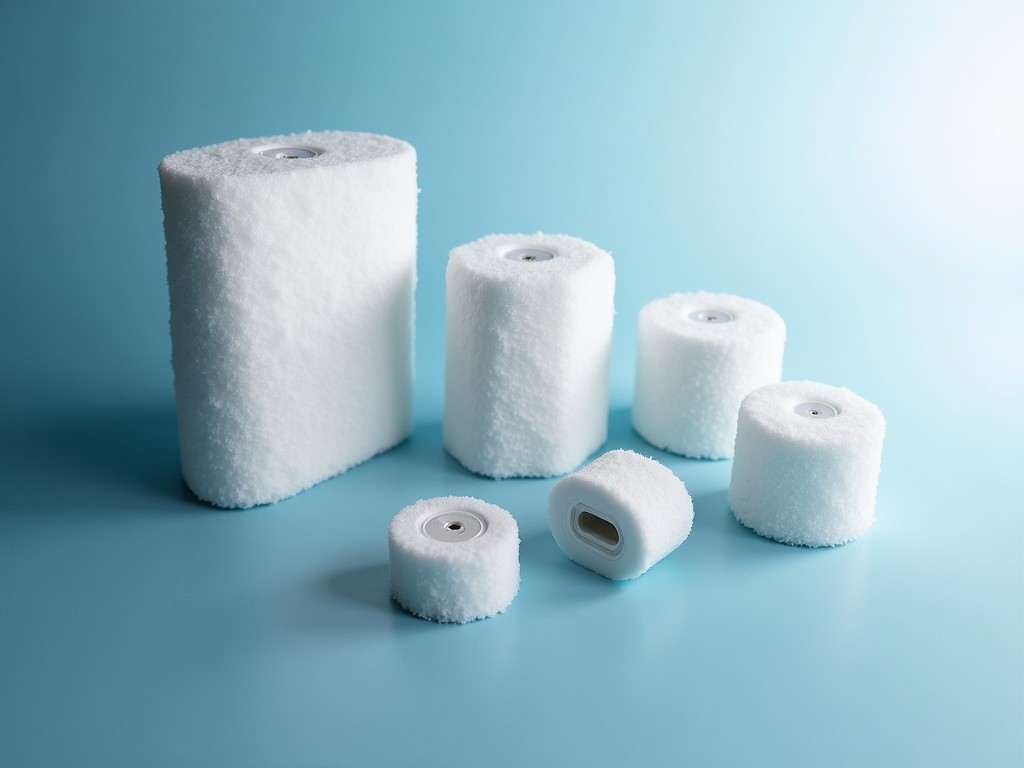
Manufacturers of air‑handling equipment often require filter cartridges that match specific housing dimensions, pressure drop targets, and efficiency classes. Supplying these components as OEM parts
Request a QuoteManufacturers of air‑handling equipment often require filter cartridges that match specific housing dimensions, pressure drop targets, and efficiency classes. Supplying these components as OEM parts allows the equipment builder to maintain control over performance specifications while outsourcing production to a specialist.
A typical round HEPA cartridge consists of a pleated media pack sealed between two end caps, with a peripheral gasket that ensures leak‑free seating in the housing. The media is usually a microglass fiber sheet rated for 99.97 % efficiency at 0.3 µm (EN 1822 H13) or higher, depending on the application.
End caps and inner cores are fabricated from either galvanized steel, stainless steel (AISI 304 or 316), or reinforced polypropylene, selected based on corrosion resistance requirements and operating temperature. The gasket material can be closed‑cell neoprene, EPDM, or silicone, each offering a defined compression set and chemical compatibility range.
| Parameter | Typical Value | Unit | Reference Standard |
|---|---|---|---|
| Initial Pressure Drop | 120–180 | Pa | EN 1822 |
| Efficiency @ 0.3 µm | ≥99.97 | % | EN 1822 H13 |
| Maximum Operating Temperature | 80 (continuous) | °C | Manufacturer rating |
| Media Pleat Height | 20–25 | mm | Design dependent |
Pressure drop values are measured at a face velocity of 0.5 m/s. Actual performance varies with pleat depth, media area, and housing geometry; therefore the table shows typical ranges that can be adjusted during the OEM design phase.
When developing a cartridge for a specific equipment model, the primary design inputs are the housing inner diameter, overall length, inlet/outlet orientation, and required service interval. These parameters dictate the cartridge’s outer diameter, length, and the type of end‑cap fitting (e.g., flange, threaded, or quick‑release).
Thermal expansion of the housing material must be accommodated; therefore the cartridge length is typically specified with a tolerance of ±0.5 mm to allow for differential expansion between metal housings and polymeric end caps. The gasket compression set is selected to maintain seal integrity after multiple filter change cycles.
Round HEPA cartridges are frequently used in laboratory fume hoods where a compact, replaceable filter is needed to capture particulates generated during chemical processes. The cylindrical geometry allows easy rotation for even loading and simplifies removal from circular housing designs.
In pharmaceutical isolators, the cartridges provide ISO‑Class 5 air quality by removing sub‑micron contaminants that could compromise sterile filling lines. The ability to sanitize the stainless‑steel end caps and gasket surfaces supports compliance with cleaning‑in‑place (CIP) protocols.
Industrial paint booths employ these filters to capture overspray particles before they reach exhaust fans, reducing maintenance frequency and extending fan life. The robust metal end caps resist the occasional solvent exposure present in such environments.
Each cartridge undergoes a three‑stage inspection: media integrity check via aerosol penetration test, dimensional verification of outer diameter and length using calibrated gauges, and leak testing of the gasket seal under a defined pressure differential. Results are recorded against batch‑specific acceptance criteria.
Media lots are supplied with a certificate of analysis confirming fiber diameter distribution and binder content, ensuring consistent efficiency across production runs. End‑cap material is verified for tensile strength and corrosion resistance per ASTM standards applicable to the chosen alloy.
Final product packaging includes a desiccant pack and a protective polyethylene sleeve to prevent media damage during transit. A QR code on the label links to the batch test report, providing traceability for the OEM customer.
Cartridges are packed in single‑wall corrugated cartons with internal dividers to prevent movement. Each carton holds a quantity optimized for standard pallet dimensions (e.g., 30 units per layer, 4 layers per pallet).
For overseas shipments, the cartons are placed inside heat‑shrink‑wrapped pallets and secured with polypropylene straps. A moisture barrier liner is added when the destination climate exceeds 80 % relative humidity to protect the media from premature degradation.
Yes. Outer diameter, length, and end‑cap geometry are defined per customer‑supplied drawings or physical samples. Tolerances are discussed during the quotation stage to ensure proper fit and sealing.
We need the required efficiency class, operating temperature range, housing inner diameter and length, preferred end‑cap material, gasket type, and estimated annual quantity. Any specific regulatory standards (e.g., ISO 14644, EN 1822) should also be indicated.
Every batch undergoes media penetration testing, dimensional inspection, and leak‑test of the gasket seal. Results are documented and a copy of the test report is provided with the shipment.
Lead time varies from 3 to 6 weeks for standard configurations, depending on material availability and order volume. Expedited options are available for critical projects.
To discuss your specific round HEPA cartridge requirements, please provide the technical details outlined above. Our engineering team will review the specifications and return a detailed feasibility report, including cost estimates and lead‑time projections.
Copyright © 2026 www.chinacartridgefilter.com All Rights Reserved.